Happy are the Happy

Yesterday I stopped by the library reading room, where they put new books, in glossy plastic, for a while before they move them to their proper stacks. It is always fun to scan the shelves for books you've seen reviewed or writers you've heard of but not read. I checked out three: Michael Hofmann's new collection of essays, a Bolano translation (I've only ever read short stories in the New Yorker) and Yasmina Reza's Happy are the Happy, translated from French.

I started with the Reza, which looked easy and played to my French nostalgia with an opening scene set in a supermarket cheese department. But I read two or three pages and decided it was boring and put it on the bench in the front hall to go back to the library. Maybe I'll have another go, I don't know. 

The title comes from a nice Borges quote. Layers of irony. The borrowed irony, the unhappy, but boring opening scene in the supermarket. Bah.

Amherst Apiaries

The streets around Stanford University and Palo Alto, its municipality, tend, like university towns everywhere, to be named after rival institutions--Princeton, Oxford--or historic figures--say, Tennyson and Kipling. Our friends live on Amherst Street, after the college and, presumably, Emily Dickinson. In their large front yard under a venerable oak tree they have raised vegetable beds and an array of beehives (and other hives, with permission, in friends' gardens). A month or so ago we were sitting in their garden talking about the trove of spring honey stored in the garage. The town yard sale was coming up: why not put a table on the sidewalk, a few flyers on the telephone poles and have a pop-up shop while the neighbours sold their cast-off pots and pans, and outgrown Ikea cribs?

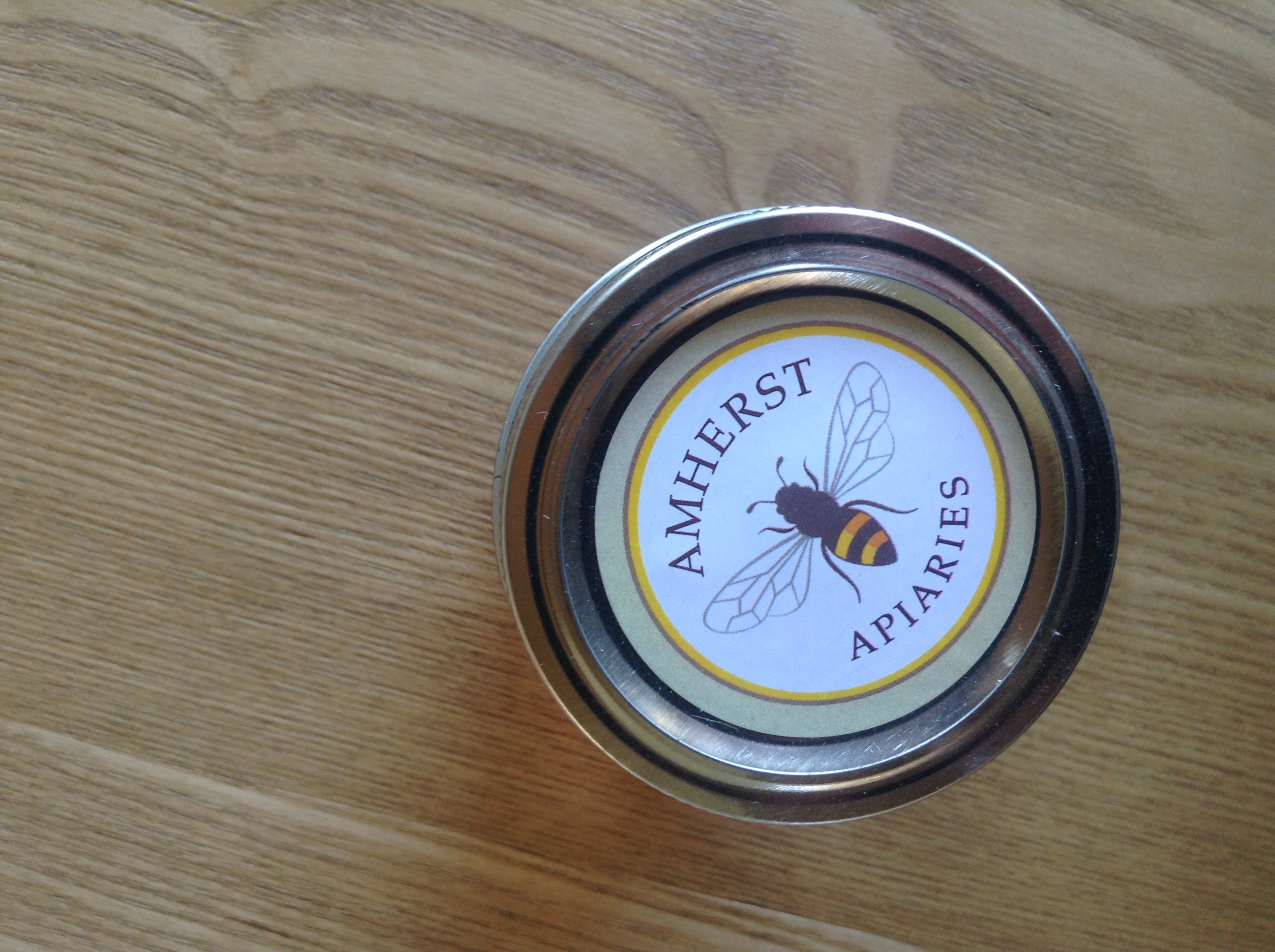
And so they did. When I turned up, after lunch, there was a table set with a red and yellow cloth, and enough chairs for passersby to settle down and chat. The honey jars--most had been sold by then--were labelled 'Amherst Apiaries, 2015 Spring Honey.' The label on the top of the jars, designed by Marj, was round with a honey bee in its centre. The honey was, as honey is, translucent gold. I came home with 12-11 ounce jars of '2015 Spring Honey.' The jars, which say, 'Made in USA,' are embossed with grapes, apples, cherries, peaches and pears. The honey is delicious.

Pencil-sharpening

Just wrote the jacket copy for a new translation. I sent it in early, months early, and thought I was off the hook for a bit, but right away got a request for jacket copy from my on-the-ball editor. He's right, of course, besides being--I think--new to the job and keen: it's much easier for me to write the blurb when the translation is still fresh on my mind. A very rough draft, I'm going to let cook slowly on the back burner for a few days.

So now I have no excuse not to get on my bike and head for the gym. I have to go anyway, so why put it off? Afterwards I can pick up a couple books at the library and have an espresso, decaf, at Coupa and watch the machines chew up the demolition site. Meanwhile, if I turn my head and look out the window I see a little pot of sage on the balcony, and another of mint. Leaves droopy. I should water them, it will get me moving in the direction of my gym shoes. On the other hand, there's a rocking chair out there that is rocking all by itself.

Ferrante (bis)

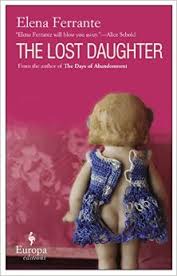
The short novel I finished last night is called La figlia oscura (The Lost Daughter). On the surface it is a simple narrative: a 40-some Italian intellectual rents a beach apartment for a month one summer. Her ex-husband and two grown daughters live in Toronto. Most days she takes her books and notebooks to the beach and swims, sunbathes, prepares her courses for the next academic year, and watches people, especially an extended family of nouveaux-riches from Naples: they fascinate and repel her; they resemble the people she grew up with, people she couldn't wait to get away from. She is particularly drawn to a young mother who reminds her both of herself, and of her daughters. Their lives will briefly intersect.

Under this simple narrative is a storm of emotions that replay the crises in the narrator's life--her abandonment of her children for three years when she was starting her career as a writer and couldn't develop a sense of herself as a person apart from her family. Her turbulent relationship with her own mother. Social class. Her sexual life.

What is remarkable about this story is not how it is told (a straightforward linear narrative of some weeks in the life of the narrator, broken up by dense returns to the past, full of emotional turbulence and extended, probing analysis of her feelings and the roots of her feelings). What is remarkable is the depth and honesty of the feelings and the intellectual powers brought to bear on what might appear to be small events, but which are, in fact, wars she is still fighting. 

And alongside this raw, brutal analysis, an erotics of place, of things, of food. The book teems with life of all kinds--disgust but above all gusto. Energy. Range. The scenes at the beach, in the pine wood on the way back to the apartment, at a dance, at the market, in the kitchen. 

Is it because I am a woman--and god knows we are hard on one another--that I want to find reasons why this should be a woman's book, rather than a universal book? The more I think about these books, and writing about them helps me sort out my thoughts, the more I think they are outstanding, in any terms. Not genteel tidy little poems, big messy canvases. I can hardly imagine how much energy and persistence it must have taken to write them. A lot of stuff must have got broken in the process.
Elena Ferrante

She may be a pseudonym but there's no way she's not a woman.

I was going on about Jenny Diski yesterday, and Ferrante, in the domain of fiction, is equally brutal in her honesty, full of rough edges, and alive! god, how to adequately communicate how in-your-face her work is, how she is writing stuff that no woman has written so powerfully before--about herself, her feelings about motherhood, the ambiguities of all sorts of relationships, sex, desire, things that most of us would look around uneasily for the bullet with our name on it if we said them out loud (like walking around without your veil on). Her aggressiveness. Her guilt. The self-loathing. The insecurity. The vulnerability. The honesty and the self-knowledge. "She" doesn't hide anything, from herself. Her life, as seen through the books, in which the same situations and characters recur, is a work in progress, ripped out. 

Harder to define is how the way these books--which are character-based--are written contribute to their power. There's an expansiveness and a brutality that is like something out of Philip Roth. Without the deliberate burlesque, the comic exaggeration. Stylistically, not much, if any, innovation. Tonally, yes. We aren't used to women being out-there like this. I wonder how much men like these books.

I'm finishing the last of the Ferrante books, or the last to me, since I didn't read them in the order they were written. I'm reading them in Italian, ordered from Amazon Italia last year in France, lugged back in my suitcase, so this is really the last one, not just the latest translation (I hear the translations are excellent), and now what am I going to do? 

Jenny Diski fanmail

It's graduation weekend, which means they've planted brand new, grown trees in front of the vacant lot that a year ago was a library and has been a demolition site with dinosaur machines chewing up concrete and spitting out rebar for most of the year; and sheathed the kiosques normally splattered with student notices for dicey activities in university-logo printed red plastic.

The latest London Review of Books has yet another installment in the Jenny Diski saga that I binge read the minute it enters the house (it takes a long detour via Paris). She is an amazing storyteller, and I am waiting to buy the book when it gets finished and read it all at once which, since she says she has terminal lung cancer, will likely be the last Diski--but in the meantime there is this incredible pleasure of reading her every two weeks in the LRB, which also has a wonderfiul Michael Hofmann review of the new Heaney Selected. Hofmann has just published a book of essays I haven't seen, but if they are a compilation of his reviews, I want that too.

Red sky to the west, blue above, stars coming out, airplanes circling, vague murmur of commuter traffic on highway 101 to the south. 

Desktop

I'm quite fond of my new desk. It's in the bedroom between two windows (more on the view later) and it's one of those folding tables people rent for events. I bought it from Amazon for something like $39.00 and what's great about it is the size--about six feet long, some kind of pebbly grey-ishwhite plastic surface on grey metal legs. At one end there's a computer screen my son salvaged for me. I use it when I'm proofreading a book manuscript: I can have my original translation text on one screen and the copy-edited manuscript on my laptop. Or vice versa. But right now the extra screen has two postcards taped to it: a Chardin still life I am particularly fond of from the Louvre, and a Cezanne postcard I also like (of his wife, full frontal, sitting in a chair). And also a sheet of paper with Goya's 'Third of May 1808'. Quite a different kettle of fish, Goya, as compared with Chardin or Cezanne. I like to think about how they can be so different and so great.

In front of the screen there is a pile of books, never mind which, then a goose-neck lamp from Ikea that looks like a mike, a tangle of cables, a two-volume Webster's Universal Dictionary of the English Language (A-LITH and LITHISTIDA-ZYX) from 1937. I took it from my parents some years ago. It is leather bound, in red and an orangey-yellow, with a lot of Moorish-looking tooling. The pages are yellow and have a good old-book smell. It's not pristine, it looks as if it had been used. Occasionally it's useful for some historical research, but otherwise I mostly use my computer's dictionary. In Paris I have an OED compact, but that's another story. The dictionaries are propping up the ten or so books I need for book reviews that haven't yet appeared in print, and a bunch of Poetry Book Society bulletins that I keep there because I haven't really figured out where else to keep them and I'm afraid I might forget where I put them otherwise. Then there are some file folders in which I try to keep the disorder of my correspondence, bills, charity solicitations, at bay, and then a printer, which is out of ink at the moment.

That's the back layer. The front layer: printer paper, both fresh and already-printed-on-one-side. A stapler. A letter from a French organisation telling me they received my change-of-address in the Etats-Unis-d'Amerique. A glasses case without any glasses but with a soft cloth for keeping them clean. A cup with pens and pencils and a pair of scissors with yellow handles. More cables. A place for my laptop, which is on my lap.