Nothing much

My daughter, who is visiting from London, and I were taking a lunch break for "silky tofu." She was working on her tan and a feature on imagination for New Scientist and I'd been translating Valéry's  M. Teste and tinkering with poems all morning. "I'll make a salad," I said, "to go with your tofu." It was a recipe she'd made for me in London in February and I was keen to see how she did it.

My daughter, like my husband, who is from Marseilles originally, has a much more casual attitude to time than I do. "OK," she said, pulling a t-shirt on and hunting for her flipflops, "I'll just walk over to the student garden and get some mint." 

When she came back I'd finished reading the Times front section, so I started on the soccer/football while she chopped ginger and added honey to soy sauce (I have the recipe on a post-it). It seemed France was pulling up its soccer socks, and the US might make it to the second round. But England wasn't doing so well. The sports section was all in colour: red yellow green blue, macaw, Apollinaire would have said. Easy to understand how people get excited about the game, even without watching it and the Americans seem to have completely stopped tsk-tsking about organisational problems and unfinished stadiums and transportation systems and given in to the sheer pleasure of Brazilian panache. The rest of the paper was in black and white...

The tofu was delicious and I forget what else I meant to say.

Keywords:

Here we go again?

Last night pedalling away at the gym I watched CNN and caught part of a Tom Hanks documentary on the 60s, Vietnam War chapter. It was made for the present situation in Iraq (I hedge) in many ways. First we (I say "we" though I'm not a US citizen, but it feels "we" from California) send in a few hundred "military advisors" who aren't going to "fight" (= shoot it out?), just test the waters, check out the situation.

Soon (I hope not and I assume that Obama hopes not too, but Kennedy and LBJ weren't great boosters of the Vietnam War either, in their private journals) the military advisors beget more "military advisors," then bombs, then "boots on the ground" napalming villages. Meanwhile the villagers "melt" into the jungle and...well you get the picture. It was chilling.

I was still listening/watching from the mats, when a woman asked if she could switch to Fox News. I mumbled something about hating Fox News, but said I was leaving anyway--not a discussion I really wanted to engage--and she said, well she hated CNN and we must "respect our differences." Must we?  I'm not so sure. 

Keywords:

The Insomniac (5 and final?)

This week was the 6th and last meeting of my Sleep Clinic, or CBT (cognitive behavioral therapy). Nice group of people: wouldn't say we "bonded" (sorry), but we began to nod in agreement  at other peoples' comments; for example, when someone said that even one bad night was too much. A diverse group, Asians and Caucasions from various countries, with various accents, equally divided between men and women, some who go to bed at 9 pm and get up at 2, others who go to bed at 2 am and get up at 6, if they manage to sleep that long. All of us quietly desperate about disfunctional sleep patterns.

I don't want to jinx anything but I think I'm sleeping better. The trick is to spend less time in bed. No more turning in at 11 on the dot and praying to get 8 hours sleep by spending 10 hours tossing and turning. Initially allowed 7 hours in bed (which led to the discovery--after all these years--that with 6.5 hours sleep I function just fine), I have been increased, in 2-15 minute increments, to 7.5 hours in bed, and most nights get 6.5 hours of rest. It is an interesting experiment. We now become part of the data. 

Off to the Sierras this afternoon with SF son and daughter visiting from London (a journalist at New Scientist, here for a conference in Sacramento on something environmental). We're going to spend two days hiking in the Desolation Wilderness. I've been tending blisters on my heels, acquired last Sunday climbing to the Stanford Dish Trail in +90 degree heat with no socks in my sneakers. Did I say "stupidly"? Make that "stupidly acquired." Searching for blister cures I discovered veteran backpackers recommend wrapping your heels in nice silvery, frictionless duct tape. You wrap a few feet of the stuff around your water bottle just in case. I found duct tape in the hall closet.

I wanted to say something about Geoffrey Hill, but don't see how to segue from duct tape to a lyric by Geoffrey Hill. There's a lesson there, because he could do that without blinking. Anyway, this is getting too long. First rule of blogging: keep it short.

Keywords:

  •  

The Insomniac, or Polishing the Teapot (4)

Week 4/6 in the Stanford Sleep Clinic Insomnia Workshop.

It's been up and down. Some days I think all this attention to sleep patterns (keeping a sleep diary, for example), not to mention my innate (it seems) wish to  meet the teachers' expectations, makes things worse, not better. My old problem is waking up in the middle of the night, not really falling asleep, except in crisis situations. But I've been crazily sleep-deprived, yet the minute I hit the pillow I'm electric.

So, as instructed, I get up, I try to do something calming. Turns out the most calming things, for me, are physical, not the obvious: reading. I empty the dishwasher, I do the ironing, I polish the old pewter teapot that has turned dull over years of neglect. Method for polishing a pewter teapot in the middle of the night, unplanned: take a Brillo Pad (thanks Andy Warhol) and scrub. Of course your hands will be a mess after, but since you still aren't sleepy you can spend some time massaging cream into them, and while you're at it, why not pamper your feet, those oriental objects of desire?

The teapot was a wedding present. There's a poem about it in my book White Sheets: when it looked like we were going to be spending more time in California we bundled it up and brought it over here, so we'd have a least a few familiar objects around. It has a nice shape: round but flattened, like a curling stone. I have now bought proper polish and some very fine steel wool and it glows on the kitchen counter. It has a history, it has a pleasing shape, it is mute but it speaks to me.

What was I getting at? The reason I'm writing all this is that last night I slept straight through, seven hours, so I'm feeling elated. I'm going to practice positive thinking all day long and maybe I can have two nights of good sleep in a row. Also this afternoon is the seminar on Augustine's Confessions,a highlight of the week, and I'll be awake enough to appreciate minds bouncing ideas off other minds.

Oh, and Downton Abbey: I've been rewatching Season 4 to relax before bed (yes, it's a whole system, I know how obsessive I am). What puzzles me is what Lady Crawley's role in the day-to-day running of the house is. Does she ever meet with the cook to discuss meals? It's hard to imagine the cook and Lady C sitting down together. It's hard to picture that scene, yet I'd really like to know the link between the kitchen scenes and the dining room scenes.

Keywords:

The Catalpa Tree

images_676.jpeg

The NYTimes this morning has a story about catalpas and other out-of-fashion trees. It says the Catalpa Tree Appreciation Society is looking for members and I plan to sign up.

When we were living in the Paris suburbs I planted one of those huge square faux terracotta pots you find in garden centres with a little flame-like cyprus tree. The pot-with-tree sat on a flat roof outside our second-storey (or first, depending on whether you are North American or European) bedroom; the thought was for the cyprus to hide an ugly chimney, but I wasn't diligent and it died in early childhood.

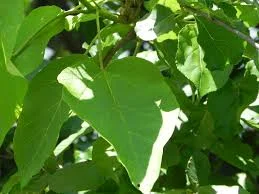
The pot sat empty. Then one spring I spied a volunteer in the clayey dirt, a sprout with big juicy leaves like one of those avocadoes you grow on a kitchen ledge until eventually it's the avocado or the kitchen--you can't have both. The sprout put out more leaves, it thrived without much attention (like some children), and the leaves turned heart-shaped and big as dinner plates.

I had no idea what it was. There was an acacia in the yard, but it wasn't an acacia, and it definitely wasn't a yew tree, like the one that hung over the (neglected) compost heap, and it wasn't a maple--I'm Canadian, I know a maple tree when I see one. I liked this thing's independence. Water wasn't something I was about to provide: it had to be carried from the bathroom over a hardwood floor without spilling. The thing didn't seem to care if we went away for a month, or three.

Eventually I spotted a catalpa in a neighbour's garden and realised where my tree had come from. The flowers were beautiful, like wisteria. The seed pods were fun. I was glad I owned a catalpa. Growing up in British Columbia it didn't feel like part of my birthright. 

The tree was a teenager in tree-years when we sold the house and moved to a Paris apartment. We threw out a lot of stuff and left a lot more to the new owners, especially book shelves because they liked books. They stored our piano. They could use the Ikea bunk beds we no longer needed. We felt lucky to have them taking over the house with their two little girls.

But somehow I couldn't abandon the catalpa, in its big, ugly, by now really obviously faux, terracotta pot. There was a tiny back porch off the kitchen in the Paris apartment. The big, ugly etc. took up half the space. Now I could water it, watch the leaves flutter on a daily basis, wait for the flowers with which I was sure it would one day honour us. I bought a canvas director's chair for the other corner of the porch and in the evening I sat in it with a shot of scotch and watched my catalpa. I could even look up, four floors from the street, and admire it, the one plant on a stack of tiny concrete back porches, meant to house mops and buckets and brooms and serpillieres. 

One hot summer when we were away in California for my husband's work the catalpa died. I was sad. I tried to replace it, in the flower market on the Ile de la Cité where, between the Hotel Dieu and the market there are two rows of catalpas. Last autumn this was. No one had any catalpas for sale. I pointed out that there were six or eight planted in the pavement right next door. Yes, they said, and when they make seedlings we yank them out and throw them away. I settled for a little fluttery Mexican orange tree, but on my way home, trundling my bush behind me in a shopping cart, I broke some pods off the Hotel Dieu catalpa trees. 

And when I got home I planted them in the big, ugly faux terracotta pot.

Keywords:
Insomnia (3)

Insomnia is, to judge by the other folks in the Sleep Clinic's insomnia workshop, is pretty universal. Some of us can't fall asleep, others fall asleep, but wake up after too few hours and don't go back to sleep. We all panic (a word I was pleased to hear a man use last week) when this becomes chronic and the pattern gets hard to break.

So the Sleep Clinic's very sensible solution is to deprive us even further of sleep. And if that seems counter-intuitive, it nonetheless makes a good deal of sleep--oops, I mean sense. It makes a good deal of sense. In my case, as in everyone else's, they decided, looking at my sleep logs, that I was spending too much time in bed for the amount of sleep I claimed to be getting (assuming my reporting was accurate). My assignment for this week was 1) to get up no later than 7 am; 2) not to go to bed before I was feeling sleepy (as opposed to "tired") and not, in any case, before midnight. 

Eventually this is supposed to break my pattern of falling asleep, waking up, stewing in anxiety, perhaps (perhaps not) falling asleep again. Last night it worked: I went to bed at midnight and slept through to 6:30. No stewing. I feel great.

But maybe tonight, more energised by more sleep, I will resist falling asleep. Who is this "I" that resists falling asleep? "I" want nothing better than to fall asleep the minute my head hits the pillow. Instead "I" starts worrying about not falling asleep and how lethargic, not to say depressed, I am going to be the following morning, how little I will feel like doing anything beyond waiting till I can unembarressedly go back to bed and try to sleep. (Rule No 1: Don'ttry to sleep! Tell me, how can you not try to sleep?) It's a little like Kafka in The Castle. I am judge and consenting victim all rolled up into one. I make my own misery. It's perverse.

Keywords:

Pen Translation Prize longlist

PEN has announced the longlist for the 2014 translation prizes, and I'm delighted that Hélène Cixous, Twists and Turns in the Heart's Antarctic is there.

All the happier as translating it was so much fun. It's a wonderful book, ranging from family history to philosophy via art appreciation in the vein of "looking after my 102-year-old-mother-and-fighting-with-my-brother" (Cixous's 102-year-old mother died last year). Comic and tragic, like Roz Chast's extraordinary memoir of her parents' last years, Can't We Talk About Something More Pleasant, but no visuals except those the reader--easily--creates in his/her mind.

Insomnia (2)

It's a strange business, sleep. A bad night's sleep (2 hours? 4 hours?) seems to involve a lot of anxiety, not to say obsession, about not sleeping, which carries over into the day, a day that feels as Elizabeth Bishop wrote in a poem "almost impossible to lift." Nothing gives you any pleasure, you push on, do what you do till you can go to bed again...

I can move mountains after a good night's sleep. 

I thought I had read all the books about sleep. I stopped using my bed as my desk. I learned to get out of bed if I wake at 3 am and begin stewing about not going back to sleep. I make myself an infusion of rosemary or verbena and go and sit on the deck and look at the stars and think about how tiny my existence is in the cosmic order. I may iron, unload the dishwasher, sew buttons back on. Generally I don't feel much like reading, because that is what I do all day long, and some kind of manual or physical activity is more relaxing. I've thought about taking up crochet...crochet therapy. Eventually I may fall asleep again.